


Laureston Alphonso Merriam 1843 - 1921
Laureston Alphonso Merriam was born in Malone, New York, December 7, 1843. He was the fourth of six children, and the only boy. His father was Herschel Park Merriam, and his mother was Betsy Towle.[1] He attended school when able,[2] and worked on the family farm.[3] Being the only boy, a large portion of the manual labor undoubtedly fell to him and his father.
Hattie Merriam, his oldest sister, married a man named Horace Knapp on November 25, 1858.[4] When the Civil War broke out Horace enlisted in Company G, 2nd Vermont Volunteer Infantry. His unit fought at the first Battle of Manassas. Not long after, Horace died from Typhoid Fever at White House Landing, Virginia. That was June 24, 1862.[5] The war brought out patriotic fervor in practically all Americans, north and south. If you had male members in your immediate family, and at least one of them hadn’t volunteered to serve, you might find that you were looked down upon or even shunned. After Hattie’s husband had died, she returned home to Malone to stay with her family. What happens next is supposition and/or family legend. Considering the recent sacrifice Hattie and her husband had made, how at that time the war wasn’t going that well for the Union, and the attitude of most Americans, undoubtedly there was a lot of pressure on the male members of the Merriam household to ‘do their part’. My Great Grandfather Merriam Dunham Jeffers claimed that Laureston was a coward and wouldn’t enlist, so to preserve the family honor, his 55-year-old father went in his place. Herschel Park Merriam lied about his age saying that he was 45 years old so his enlistment would be accepted. He ended up serving two years and four months.[6] (Grandpa Jeffers father Milan, knew Herschel Merriam and his son Laureston. I'm sure he was only repeating what he had heard and learned for himself. But, there is no evidence or information that survive today which substantiate his feelings.)
While his father was away at war, Laureston took charge of the farm. His father wrote home often. On more than one occasion H. P. gave advice and made suggestions as to what needed to be done, and once he instructed his wife to sell the Milk Cow. The latter suggesting the family’s farm income may have been lacking.[7] Less than six months after H. P. returned home from the war the Merriam family moved from Malone to Berlin, Wisconsin. Laureston remained behind and ended up graduating from Franklin Academy in 1867. After graduation, he moved to Berlin to be with his family. Not long after his arrival he started studying medicine with Dr. H. G. Pope and for a while with Dr. Miles Mix, both of Berlin. During this time he also taught at Waukau High School.[8] The fact that he was a high school teacher in Waukau becomes significant when you consider his first wife was nine years younger than him, and attended Waukau High School during the time he was a teacher there.[9] Laureston went on to graduate from the University of Michigan Department of Medicine and Surgery with an M. D. degree, in 1873.[10] Not long after graduation Laureston moved to Cresco, Howard, Iowa, to set up a medical practice. On April 8, 1873, Laureston married Maddie Desca Carter, of Waukau, Wisconsin.[11] A little over three years later, on June 7, 1877, Mattie gave birth to a baby boy they named LeRoy. Sadly, LeRoy died later that same day, and was buried in Oak Lawn Cemetery in Cresco, Howard, Iowa.[12]
The lived there until 1879 when they moved to New York City, where Laureston worked at Bellevue Hospital for a year. By 1881 they had moved to Omaha, Nebraska, where he practiced the specialty of chronic and nervous diseases. He also served as a medical adviser for several life insurance companies.[13] On June 21, 1883, Laureston was named as the Professor of Theory and Practice of Medicine, at the University of Nebraska Medical School. This would require him to travel back and forth between Omaha and Lincoln.[14] While making their life together in Omaha, he also became a member of several fraternal organizations. He was a Mason, a member of The Omaha Douglas County Medical Society (he was President from 1893 – 1895), Nebraska State Medical Society, Modern Woodmen of America, Knights of Pyhthias, Royal Neighbors, and the Improved Order of Red Men.[15] The Improved Order of Red Men was a fraternal organization that supposedly traced its origins back to the Sons of Liberty and the Boston Tea Party. They patterned their governing body after the Iroquois Confederacy and strove to keep the customs and terminology of the Indian people. They also worked to help their fellow man through charitable work. Royal Neighbors was a fraternal organization founded by women that promoted charity and financial education, while striving as its main goal to empower women. The Knights of Pythias was a fraternal organization founded in 1864 in which its members strove to make benevolence, generosity, kindness, and tolerance a reality in their lives. The Modern Woodmen was a fraternal financial organization that wanted to support families and strengthen communities. On October 25, 1886, Laureston, a 95th degree Mason was chosen as Grand Prelate of the Grand Body for the next four years.[16]
Mattie Merriam was quite busy herself. She was a successful sketch writer, and often contributed to the periodical New York Weekly.[17] She was an active newspaper correspondent writing about the many social issues of the day primarily woman’s suffrage.[18] She also was active on the lecture circuit.[19] For a while Mattie’s younger sister Minnie was living with them attending school.[20] It appears during her stay she made the acquaintance of Charles Roemer, and on October 15, 1888, they were married.[21] Sadly, theirs was not to be a long and happy union. On February 9, 1889, Minnie was driving her buggy when her vehicle was run into by a farmer rapidly driving his wagon. She was thrown from her buggy landing on her head, with her vehicle overturning and landing on top of her. Minnie was extricated from the accident and carried to her home where it was determined she had suffered a serious concussion. Having suffered with her injuries for almost three weeks she eventually succumbed to spinal meningitis on February 27.[22]
With all their career successes, not all was well in the Merriam household. Sometime after moving to Omaha, they lost another child shortly after its birth.[23] On January 20, 1893, Mattie Merriam filed for divorce from Laureston. She stated that on October 13, 1892, and on many other occasions, Laureston committed adultery with an unknown woman who resided at 536 South 30th Street, in Omaha. She also accused him of verbal and mental cruelty. Mattie stated several times he said she was insane, and planned to have her committed to an insane asylum. On other occasions he stated that if she didn’t stop making the aforementioned accusations against him he would ‘make it so she couldn’t ever do so again’. For these reasons she no longer felt safe living in the same home with him. She stated that the Doctor had a practice which brought in over $7,000.00 per year, and had assets totaling about $3,000.00. These assets included a large library, medical instruments, and medicines. Mattie went on to say that Laureston no longer was supporting her and she had no means which to do so. Therefore she was asking the court to be awarded a divorce, and be paid alimony and such other relief equity may require.[24]
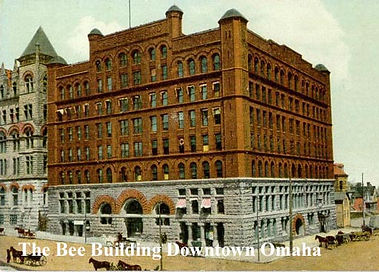
On February 17, 1893, Laureston responded to Mattie’s petition by denying all of her allegations.[25] On March 18, Mattie’s attorney notified Laureston and his counsel that he would be applying for alimony with Judge Frank Irvine. Also her costs accrued during the prosecution of the divorce were included in the application.[26] Five days later, Laureston responded to her application for alimony. He claimed that for years, Mattie had indulged in the habitual and excessive use of morphine, to such an extent that it injured her mental faculties causing her to have morbid and unnatural thoughts. Despite her addiction Laureston said their home life was peaceful and pleasant until early 1892, when Mattie’s mother, Elizabeth Carter, came to Omaha uninvited and installed herself in their home. He stated that Mrs. Carter was a divorced woman with a negative attitude towards men in general. She soon developed even more of a dislike for Laureston when he expressed his displeasure at her moving in to his house. Not long after Mrs. Carter took up residence with the Merriam’s, Laureston stated that relations with Mattie became unnatural and strained. According to Laureston, Laura soon conceived of unaccountable notions such as accusing him of infidelity, and unkind treatment. Despite the fact he was treated coolly by his wife and mother-in-law when he was at home, Laureston continued to provide for them both in way suitable to the station in life they had become accustomed. He claimed that on the morning of January 20, 1893 he left home for work as usual, everything appearing to be normal in his household when he left. When he returned that evening, he found the household abandoned by his wife and his mother-in-law, and the household furnishings in the amount of $1,200.00 were gone. For a while he had no knowledge of where his wife was living. Eventually he received word that she had moved back to her hometown of Cresco, Iowa. He also stated that when his wife filed for divorce, the accusations that she leveled against him were published in the local newspapers. And since that time his income has reduced to the point that he was hardly able to meet his personal and business expenses. He also declared that prior to this his income was high enough to support Mattie, his business, and his elderly mother and invalid sister. Laureston also stated that before his wife left town, she stopped by N. B. Falconer and Morse Dry Goods purchasing on account over $100.00 worth of merchandise. This was added to $94.00 that they already owed. His office rent of $75.00 was also in arrears, at the Bee Building in downtown Omaha. Since his wife filed for divorce in January, and the details had been published in local newspaper, he had only earned $186.00 a figure substantially below his normal income. He further stated that he was still indebted in the sum of $700.00 to $800.00 from a judgment rendered against him in the County Court, and at the present time the only property he had was his professional library and instruments. He had put up a $20.00 retainer for his attorney and if he was forced to pay for his wife’s legal bills, he would have to sell his professional property ending his professional prospects and bringing his mother and sister to penury. [27]
On May 29, 1893, Mattie filed a letter stating that she hadn’t received any of the court ordered alimony.[28] On May 30, 1893, Laureston filed a letter stating that he had been unable to make his ordered alimony payments, but he felt that if given the time to reestablish his medical practice he would be able to do so in the future.[29] On May 31, 1893, Mattie filed a motion requesting the court find Laureston in contempt, since he had failed to pay her alimony.[30] On July 19, 1893, Laureston filed an affidavit stating that his present income was insufficient to pay the outstanding debts his wife had left him, including the $100.00 alimony he had been ordered to pay. With the reduction in his business due to the charges his wife had brought against him, he was forced to move into his office and was sleeping on the couch.[31]
At some point before the end of September 1893, Mattie Merriam and her mother Eliza Carter left Cresco, Iowa, and went to Chicago, Illinois, where they attended the World’s Fair. This World’s Fair was a landmark one, they called it the Columbian Exposition in honor of the 400th anniversary of Christopher Columbus’s historic voyage. The Exposition ran from May 1, 1893 to October 30, 1893. Her family stated that when she returned from her trip, she seemed somewhat indisposed. Over the next several weeks she suffered from nervous prostration and sheer exhaustion. These conditions obviously brought on by her divorce, long travels, and uncertain future, led to her untimely death on Sunday, October 29, 1893, in Cresco, Howard, Iowa.[32]
Dr. Merriam was very active in all the organizations in which he was a member. On May 22, 1889, in Kearny, Nebraska, he attended the 21st Annual Session of the State Medical Society. He read a paper on Acute Diseases, which was thoroughly discussed and severely criticized. But he was elected Treasurer.[33] On June 9, 1889, he was appointed Senior Warden at his Masonic Lodge of Perfection.[34] July 3, 1889, at the Council Bluffs, Iowa Chautauqua, Dr. Merriam lectured on ‘the Eyes and the Ears’. (A Chautauqua was an adult educational program, popular in the 19th century.)[35] January 12, 1890, Dr. Merriam was elected First Vice President for his branch of the Knights of Pythias.[36] April 6, 1890, Dr. Merriam was made Sachem of the new Omaha Tribe of the Improved Order of Red Men.[37] May 13, 1891, Dr. Merriam attended the 23rd Annual State Medical Society in Omaha. He addressed the group on ‘Summer Diarrhea in Infants’. He was elected Recording Secretary.[38] April 11, 1892, Dr. Merriam assisted in the autopsy of a man who died in unusual circumstances at a “Gold Cure Institute”. These organizations treated those addicted to alcohol with gold infused injections. He determined that the man died from probable heart failure due to his alcoholism. At the time of his death he had not received any treatments.[39] May 10, 1892, Dr. Merriam attended the State Medical Society’s Meeting in Omaha.[40] October 27, 1893, he publicly endorsed Dr. Samuel D. Mercer as a candidate for the Mayor of Omaha.[41] January 20, 1894, he was installed as one of two Physicians of the Local Woodmen of the World.[42]
Dr. Merriam kept busy in various organizations while attending to his own medical practice, and going through a messy, public divorce. Somewhere along the way Laureston made the acquaintance of a young lady Laura E. Schamel. Laureston seemed to enjoy the company of women much younger than himself. She was 28 years younger and the daughter of a successful Saddler, Jacob Schamel and his wife Anna. Laureston and Laura were married on May 21, 1895, in Omaha.[43] This was also Laura’s second marriage. The marriage seems to have met the desires and needs of both parties. A young divorced woman like Laura at this time may have been a bit of a family embarrassment. Laureston took a financial hit when he was going through his divorce, and by June 1900 he was living with the Schamel’s.[44]
Tragedy struck the Schamel family on March 22, 1899. Mrs. Anna Schamel was attending a Ladies of Maccabees meeting at a building called the Labor Temple in downtown Omaha. A fire began in the basement when a water company employee lit some rags in a bucket to read the meter. The fire got out of control and trapped 20 ladies in Mrs. Schamel’s group. About 14 of them found a way through the flames to the street below suffering burns along the way. The other six including Mrs. Schamel were trapped on the third floor with no way out. They made it to some windows and were hanging out to get air, but as the heat and flames got closer, one by one they all jumped. Mrs. Schamel broke both elbows and was badly burned. She soon succumbed to her injuries.[45] Later after her burial, on November 15, 1900, Jacob Schamel filed a law suit against the Omaha Water Company for $5,000. Almost exactly two years later, on November 18, 1902, Schamel was awarded $4250.[46] It’s not clear of the exact reason, maybe due to his wife’s death, but on August 11, 1905 Jacob Schamel had moved to Los Angeles, California. Laura Merriam decided that she would go with her father, and left Laureston behind.[47]
As before Dr. Merriam was quite active in the various organizations in which he was a member. On January 8, 1902, Laureston was named Physician of the Omaha Modern Woodmen of America.[48] On January 8, 1904, Laureston was a featured speaker at a meeting of the Modern Woodmen of America.[49] December 7, 1904, Dr. Merriam was again elected Physician for the Omaha Modern Woodmen of America.[50] June 6, 1906, Dr. Merriam performed the Ritual Service at a several Nebraska County rally of the Modern Woodmen of America.[51] December 30, 1906, Dr. Merriam addressed the Omaha Philosophical Society on the subject of ‘Unity of Nature’.[52] February 4, 1907, Dr. Merriam was named to the Entertainment Committee of the Omaha Modern Woodmen of America.[53] December 13, 1910, Dr. Merriam was elected Physician of the Golden Rod Camp of the Royal Neighbors of America.[54] September 3, 1911, Dr. Merriam addressed the Omaha Philosophical Society on “Bread and Meat Suicide”.[55]
On May 11, 1910, Dr. Merriam addressed the Nebraska Medical Association on his paper “Drugless Healing”. In so doing he stirred up some criticism and quite a bit of discussion. He stated that there were too many haphazard surgeries being done, with an eye on getting through and drawing the fee without proper knowledge of the patient beforehand and not enough follow through afterwards. He criticized osteopathy, Christian Science, and all forms of drugless healing stating they were woefully ignorant methods of medicine.[56] September 3, 1910, at a meeting of the Missouri Valley Medical Society, Dr. Merriam said that ‘there was no scientific proof to support the practice of vaccination and he proclaimed his disbelief in the operation’. At the same gathering he also stated that for sedentary people ‘eating of fried, boiled or steamed corpse is not conducive to pure blood, pure mind, pure body, or pure conduct’. A doctor at the conference expressed the hope that the press of the country would not think that Dr. Merriam’s beliefs were those of the society.[57] On September 18, 1913, Dr. Merriam read a paper to the Missouri Valley Medical Society which they later voted unanimously to not publish in the Medical Herald. In his paper Merriam said that appendectomies were a fashionable fad, and 80 percent of all surgeries were unnecessary. They were only being performed to extort money from the unfortunate.[58]
After almost 11 years Laureston must have decided that Laura was not coming back, so on May 22, 1916, he filed for divorce on the grounds of abandonment. Since Laura was living in Los Angeles, a summons was issued to her on June 16, 1916. After Laura received the summons she chose not to respond, and on July 21, 1916, the divorce was granted to Laureston.[59]
On May 26, 1918, Dr. Merriam while visiting a fellow physician, was about to board a street car, when he was struck by an automobile driven by an unidentified man. Merriam was knocked to the ground and badly bruised. His wounds were dressed by the Police Surgeon and he was taken back to his friend’s home.[60] Just two years later, around October 7, 1920, Laureston suffered a heart attack, and a week after that little hope was held out for his recovery. His three surviving sisters were soon notified of his condition. He had been recuperating at his home, but on October 15 he was taken to Swedish Mission Hospital when he grew weaker.[61] He fought on for a while succumbing to Arterial Sclerosis on January 25, 1921 at 7:00pm. He was buried three days later in a Masonic section of Forest Lawn Cemetery, in an unmarked grave.[62]
Laura Merriam lived out the rest of her life in Los Angeles, California, her last years spent living with her younger sister Leone’s family. She never remarried. Laura died October 19, 1948.[63] She was buried in Inglewood Park Cemetery.
[1] Merriam Family Bible
[2] 1850 Federal Census
[3] 1860 Federal Census
[4] Horace Knapp and Hattie Merriam’s marriage record
[5] Merriam Family Bible
[6] Military Records
[7] H. P. Merriam Diaries and Letters
[8] Merriam Genealogy in England and America
[9] 1870 Census
[10] AMA Dead Physicians Card File
[11] Marriage Record
[12] Tombstone
[13] Merriam Genealogy in England and America
[14] Newspaper
[15] AMA Dead Physicians Card File
[16] Newspaper
[17] Some Merriam’s and Their Connection with Other Families. By: Rufus N. Merriam
[18] Obituary
[19] Newspaper
[20] 1885 Nebraska State Census
[21] Marriage Record
[22] Newspaper
[23] Cemetery Records
[24] Mattie Merriam’s divorce petition
[25] Letter
[26] Letter
[27]Response to divorce filing
[28] Letter
[29] Letter
[30] Motion for contempt of court
[31] Affidavit
[32] Obituary
[33] Newspaper
[34] Newspaper
[35] Newspaper
[36] Newspaper
[37] Newspaper
[38] Newspaper
[39] Newspaper
[40] Newspaper
[41] Newspaper
[42] Newspaper
[43] Marriage License
[44] 1900 U. S. Census
[45] Newspaper
[46] Newspaper
[47] Divorce decree
[48] Newspaper
[49] Newspaper
[50] Newspaper
[51] Newspaper
[52] Newspaper
[53] Newspaper
[54] Newspaper
[55] Newspaper
[56] Newspaper
[57] Newspaper
[58] Newspaper
[59] Divorce Decree
[60] Newspaper
[61] Newspaper
[62] Death Certificate
[63] California Death Index


